Friday, June 19, 2015

The Valley of Horses Review


Rating: 
                         
*For those of you who haven’t read The Clan of the Cave Bears, SPOILER ALERT!
                
     The second book in the Earth’s Children series is The Valley of Horses. At the end of the first book, Ayla finally leaves the Clan behind to find her own people, the Others. This novel follows her treacherous and solitary journey through the wilderness as she searches to meet someone else like herself.
     
     I personally really enjoyed this novel. The first book centers completely on Ayla’s similarities and differences to people of the Clan, and she’s forced to hold back her own unique skills to match their traditions. In this second installment, we get to see just what Ayla is capable of. For the first time, she doesn’t have anyone to tell her that she can’t hunt, take care of wounded animals, or even laugh. It’s exciting to see her explore her own abilities and find new and improved ways of doing things.
            
     I also really like how the format of this story was set up. Instead of just seeing things from Ayla’s perspective and what is going on where she is at, we get to follow two brothers as they go on a journey to places far from their home.  Both stories are told side-by-side, switching between perspectives after every few chapters.

     As a writer, I can’t help but appreciate how well this technique works for building up suspense. From the beginning, it’s obvious that Ayla is going to have a run-in with these brothers, and it makes the reader so curious to see how they will respond to each other. Every chapter I kept wondering, “Is this the chapter where they’re going to meet?”. To be honest, I was starting to get a little impatient because I was so looking forward to that scene. It was totally worth it when I got there though!

     The whole time I was reading this sequel, I kept thinking back to my experience reading Kane and Abel by Jeffrey Archer. It takes place in a completely different setting, but Archer also uses the same suspenseful technique, writing from two different characters’ points of view and bringing them closer and closer to each other before they finally interact with each other. There’s something so satisfying about reading a book like that and finally getting to the scene where two important characters meet.

     Other great aspects of this novel are Auel’s incredible detail and realistic descriptions of prehistoric times. After reading the first book in the series, I would expect nothing less. So, with so much to love, The Valley of Horses definitely gets four Star Lords from me. If you enjoyed The Clan of the Cave Bear, you’ll love this one!

Wednesday, June 3, 2015

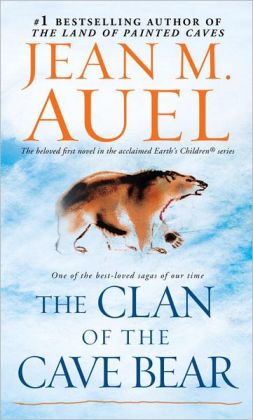
The Clan of the Cave Bear Review


Rating: 


     So, I’ll be honest. I’m going through a bit of a love/hate relationship with the Earth’s Children series. Maybe I’m just not in the habit of reading lengthy series, but seriously (or should I say series-ously?). These books are taking me forever to read. I started the first book in mid-February, and I’ve just recently started reading the fifth one. Granted, each book is over 800 pages, but still. That’s a long time to spend with a cast of characters. However, I did say love/hate relationship, so don’t let this mini rant scare you away from reading it. I did give the first book four Star Lords after all. Read on to find out why!

     As I may or may not have mentioned before, one of my favorite things about reading is that you get to experience imaginary lands and ancient civilizations in such a realistic way that you almost feel like you’re there. Well, The Clan of the Cave Bear goes above and beyond in this regard, which is why I have given it the rating of four Star Lords.


  Set in prehistoric times during the middle of the Ice Age, this novel follows the life of Ayla, a young girl who loses her family to an earthquake and ends up being raised by the Clan, or as we know them, cavemen and cavewomen. Even though she is so different-looking from the people who raise her, Ayla does everything she can to fit in, learning their language and obeying their customs to the best of her abilities. With no memory of her birth parents, Ayla has no choice but to learn to survive among these strange and exotic people, and you get a front-row seat to her thrilling experience.

     If you’re looking for a light and enjoyable read, like junk food for your brain, then this book is not for you. But if your brain is craving a full-course Thanksgiving meal that’ll leave you full and satisfied for at least a week, then look no further. This book is filled to the brim with rich history and vivid descriptions of places that no longer exist. As the sole human among dozens of cave people, Ayla is our relatable guide in this ancient world, and she carries out her role very well. Everyone has felt like an outcast before, but Ayla’s trials take it to an entirely different level. It’s encouraging to see how she handles every situation that arises and grows into a strong young woman. 

     The thing about this book that I’m most stunned by is the incredible amount of realistic detail included. I shudder to think of how much research Jean M. Auel must have had to complete just to write this one book. With her in-depth description of the landscape and her detailed explanations for how to create prehistoric tools, I’m almost convinced that she’s hiding an iPed (see Rule #5) in her garage that she used to travel to the Ice Age. Either that or a caveman in her basement. 

     Her research for this series is so extensive that Auel was given honorary degrees from four different universities as well as the title of Officer in the Order of Arts and Letters by the French government’s Ministry of Culture. I’m not even sure how much of her book is historical fact and how much is made-up fiction because she blends the pieces together so well. After reading this book though, I’m pretty sure that if I ever got stuck in the woods, I could cook up a mean stew and build all the necessary dishes and eating utensils just from my immediate surroundings. 

     So, do you think you could survive the coldest period in history with a group of cave dwellers? Could you live off of the land before the invention of the grocery store? Would you dare to face a wooly mammoth with nothing but a handmade spear and your fellow hunters? If you think you’ve got what it takes, join Ayla before the dawn of time in a world of epic proportions, where the wild animals are more ferocious and the winter winds more fierce.


My Personal Book Rating Scale

     For the sake of clarity, I’m going to be using a five-star rating scale. But stars are boring, so I’ll be calling it the 5-Star Lord Scale! In addition to being a play on the term ‘5 Stars’, Star Lord’s real last name is Quill, which is also awesome because, back in the good ole’ days, writers used feathery quill pens to write down their masterpieces.

IMPORTANT NOTE: The ratings I give a book are my own personal opinions. Everyone has different tastes, so I encourage you to seek out books that strike your fancy, no matter what they may be rated on here. I’d hate for you to pass over what could’ve been your favorite book because I personally thought it was awful.


    With that said, here’s a breakdown of every rating in my personal scale:

The Star Lord Scale


5 Star Lords: Two weeks later, and I’m still thinking about this book. I was on the edge of my seat the whole time, unable to put it down but not wanting it to end. It was a reading experience that I’ll never forget and never get to re-live.

4 Star Lords: I thoroughly enjoyed this book. There were original elements that made me see things in a new light, and something in particular stuck out to me (writing style, character development, unexpected plot twist, etc.).

3 Star Lords: There were good parts and bad parts. I enjoyed it while I was reading it, but it didn't really give a lasting effect. I would probably recommend it if you’ve never read it, but it’s not one I would necessarily pick up again.

2 Star Lords: I barely managed to finish this book. It was drawn out, poorly written, and confusing. Only through sheer determination did I get to the end. 

1 Star Lord: I couldn’t finish it. I put it down and walked away. Not because it goes against some personal morals, but because it was just that terrible. Every time I tried to sit down and keep reading the book, I immediately fell asleep or came close to it. How did this get published? *

* I know this last rating sounds harsh, but let me preface it by saying that I almost NEVER walk away from a book. I can think of only three books that I did not finish, and they were all well written from what I could tell, but I just couldn’t get into them. A book has to be reeeeeeeeaaaaally terrible if I give it this rating.

On the flip side, it will be rare for me to a rate a book as a five either. It has to be a truly magical reading experience for that to happen. Most of my ratings will range between two and four Star Lords.

Thursday, May 7, 2015

The Struggle

      My first book review should be up shortly, but until then, here's a lovely poem to hold you over! I wrote this piece at work one day when my computer stopped working and wouldn't let me log in. I hope you enjoy it! Let me know in the comments if you've ever experienced . . . The Struggle.


The Struggle
by Shellie Kinard

(It's real guys.)

The computer's a most useful tool
Used for business or pleasure or school.
But user beware
For when you most care
It will shut down and make you the fool.

There's no point in begging and pleading.
Devices don't interpret feelings.
So swallow your tears
And get help from peers
To decode your error box meaning.

Now you've clicked around in confusion
And still can't find a solution.
Troubleshooting and malware
As you pull your hair.
Screw it. Just throw it in the ocean.


Friday, May 1, 2015

Part 4: The Rest is History

            For the final part in my Tallahassee Writer’s Conference Goodies, I will be discussing how to effectively research and write historical fiction. This information came from two different sessions presented by Arliss Ryan. I had a chance to read excerpts from some of the books she’s had published, and they were excellent! She definitely knows what she’s talking about, and you should go check out her work on her Facebook page here.

           Without further ado, here is the last golden nugget:

#1. We Search for Research
If you plan on writing historical fiction, it’s important to make sure you get the history part right. Many people that read these types of books are knowledgeable in history, and they’ll know if your facts aren’t straight. Thanks to a handy little tool called the internet, you’ve got a large amount of resources at your disposal to find the information you need.

There are other places that you can find fun facts, though. Consider going to a library, museum, or historical society to learn more about your topic. Keeping in mind that some of your audience will already know a lot about the history you present, you want to give them something new to learn so that your book will feel fresh and interesting. Going to places other than the internet is a great way to dig deeper and uncover unique and largely unknown bits of history.

If your research involves speaking to an expert, make sure that you do your homework before meeting with the individual. Do some basic research and compile a list of questions beforehand. Sending a handwritten thank-you note after the meeting is a nice touch as well.

Who's up for a field trip?


#2. Anna Lies (and so does the Internet)
I remember once getting so excited when I saw an article on the internet that said there was going to be a Doctor Who/Sherlock crossover. I immediately started imagining what the meeting between Sherlock and The Doctor would be like and what that would mean for Sherlock’s opinion on scientific truth. It’s amazing how carried away I got with it. Imagine the crushing blow that I took when I found out later that it was a just a cruel April Fool’s joke put out by the production company. My bubble of excitement had grown so big I’m surprised it didn’t send out seismic shock waves when it burst.

The point of that sad little tale is that it’s ridiculously easy to put something fake on the internet. You have to take everything you read with a grain of salt. Especially if it’s on Wikipedia. Just because Joe Schmo writes an entire article about how dinosaurs actually went extinct from going on a gluten-free diet doesn’t mean it’s actually true. Make sure you’re getting your information from a trusted site, and double-check your info with multiple sources if you can. Also, learn to tell the difference between facts and speculation. If a site says that Harry Houdini was likely a fan of chocolates because his cousin owned a candy store, that’s speculation, not fact. (As far as I know, that last sentence wasn’t even speculation because I made it up.) Analyze. Because Anna lies and so does the internet.

*Bonus tip: Don’t do internet research on April Fool’s day. Trust me on this one.

This is only slightly related, but come on. It's the Hulk. (Side note: Go see the new Avengers movie! It's awesome!)


#3. Information Overload
Info-dumping is a wonderful way to get your reader to put down your book and go do something productive. But as writers, that’s the last thing we want. Think about how to use the factual information you’ve learned to add depth to your story without taking away from your page-turning plot. As Arliss Ryan said in one of her sessions, “Your research should never stick out like a sore thumb, but should be weaved in seamlessly so that the reader hardly notices it’s there.” If you want recognition for how much stuff you know about the Roman empire, go on Jeopardy. The ultimate purpose of your fiction should be to entertain the reader, not bore them with a lecture.

If you want to share important knowledge in a visual way to better represent how it connects to the story, consider including a map or family tree at the beginning of the book. In the Earth’s Children series, Jean M. Auel provides a map at the beginning with an outlined trail of the path that the character takes throughout the story. It helps readers gain a better understanding of just how far she had to travel from start to finish.


#4. That Thing that Writers Do
You know that thing that writers do? Where they put words on paper? Yeah, writing. That’s what this step is about! Once you’ve gathered enough info, checked its accuracy, and decided how you want to present it, you’re just going to write! Keep in mind that you shouldn’t wait until you’ve gotten every little bit of research finished and become a world-class expert on the subject. Since you’re writing a fiction book and not a textbook, you really just need enough facts to make sure your story makes sense and gives characters a vivid backdrop.

This one’s a toughie for me because I always feel like I have to know everything and be perfectly prepared before I begin. But if you did that, you’d just use up all your energy on research and be too exhausted to write. It’s also a good idea to write as much of your first draft as possible before traveling somewhere for research. That way, you have a good idea of the facts you’ll need to learn, and you won’t end up having to make another expensive trip. Just put an asterisk next to info in your story that still needs to be verified and use the ‘find’ tool in word to go back to it later.

Truth.


#5. The Conveyor Belts of History
There are a handful of excellent “literary conveyor belts” that can get your history facts across to the reader during your story without being too obvious. For example, you can use character interaction, conveying info about a place as one of your characters walks through it. This gives you a great opportunity to use sensory language and make your readers feel like they’re really there. Until Apple invents an iPed (which is bound to be the name of their time-traveling moped once they invent it), reading is still the only way we have of traveling to another time in history so make it an unforgettable trip for your readers.

Another way to convey facts is through flashbacks. When you do this, you can share important info with the readers while keeping certain characters in the dark still. Maybe Donna is mentally looking back on her times as a ballerina assassin as she washes the dishes while her friend Becky does the drying and remains completely aloof.

A third information conveyor is dialogue. Just make sure that you don’t have a character telling someone else what they should already know just so you can tell the reader. That makes it seem forced. The character giving the historical facts through dialogue should be a believable source that would be likely to know that info, whether it’s because they’re a studied doctor or an avid eavesdropper picking up the latest gossip.

One other way to share your history facts believably is through character recollections. A great place for characters to have deep inner monologues is a church because it’s a likely place for someone to reflect on things. Make sure your recollections are driven by the character’s unique perspective.

Apple iPed: Coming to a Store Near You


#6. Davy Jones’ Diary
Would you find a story believable if the author included a scene where Christopher Columbus walked up to King Ferdinand and said, “Hey dude. What’s up? Can I borrow your boat? Let me borrow your boat.” Not likely. I don’t know when the word ‘dude’ first started being used, but I can guarantee that Columbus never uttered that word (unless it had some weird alternate meaning back then, like the plume of one’s hat). 

So, since the iPed has yet to be created, how are we supposed to know what historical figures from the past were likely to think or how they probably talked? If you’re able to find a diary or some kind of writing from your chosen time in history, that would definitely be the best way. You can also examine photos of your time period to get a good feel for a place. When looking at the images, try and think about the sensory details. What kind of material are their clothes made out of and how did the weather look that day? Were they eating some kind of food in the picture? What did it probably taste like? This is where you have to get a little creative if you don’t have much information to go off of.

For more help in the language aspect, use the dictionary or internet to look up the kinds of words that were used in that time. Since you’re writing for a modern audience, it’s okay to still use slightly modern language as long as you slip in some words here or there that still give the vibe of the book’s time period.

Welcome, mighty Columbus. The dude on your hat is looking most feathery today.


                And that’s the end of my writing tips from the Tallahassee Writing Conference! As you can see, there is a lot of information that can be learned from attending even just one writing event. I put my own personal twist on each speaker’s advice, but overall, everything I wrote about was learned from a much wiser and more experienced writer. I’ve included links to each of their pages in the posts and on my Miscellaneous page, so I hope you’ll go check them out.


              Other than that, keep writing, reading, and being awesome!

Thursday, April 30, 2015

Part 3: Make ‘em Pull an All-Nighter

            This has nothing to do with becoming an evil professor that gives a ridiculous amount of homework that is all due the next day. No, I’m referring to those books that keep you reading into the wee hours of the morning because you just can’t put them down.

The tips from this session came from a long-time book editor named Lorin Oberweger. She actually handed out a detailed sheet with her own method and rating sheet, but I’m just going to give you some of her general tips. I don’t know if her method is copyrighted or not, so I won’t go into it. If you want to look into taking one of her awesome sessions, though, you can find out more about her here.

So let’s get started:


#1. Out with the Old, in with the New
Readers are excited when they’re given a new way of looking at things. Be original with your story and put something fresh out there. “But how?” you say. “There are so many stories out there. The one I want to tell is probably already written!”

I don’t know about you, but I don’t totally buy into that phrase, “There’s nothing new under the sun.” It just sounds like an excuse to not be creative. Sure, there are going to be unoriginal pieces in your writing, but what will make your work one-of-a-kind is how you manipulate those pieces and make them into a brand new whole.  Write about a murder from the perspective of the victim’s ghost or place your story in prehistoric times but give everyone cellphones. Use your book as a kaleidoscope that readers can look through to see their ordinary world differently.


#2. Action vs. Reaction
I used to come up with these fast-paced plots that I was so excited to write, but when it came time to sit down and begin, I found that my main characters were dull and flat. Every time. I couldn’t figure out where I’d gone wrong when I had such a riveting story line planned out. Then, one of my friends pointed out that my protagonist wasn’t causing any of the action but was simply being carried along by the events in the story and reacting to what others were doing.

Don’t make the same mistake I did for the longest time. Make sure your main characters are actively engaging in the story. Have them make bold choices or stupid mistakes that alter where the plot goes. The character may not have caused the inciting incident, but the rest of the story should be about the actions they take to reach their ultimate goal that was set in motion by that incident. To make sure that your character is being active, ask yourself this: If I took away the external conflicts and obstacles, would my character be doing anything?

In one of the best movies of all time, Starlord kicks off the movie by making a choice that affects the rest of the plot. He steals the mysterious glowy ball for himself and everyone comes after him.


#3. FOR SPARTA!!!!!!
Another way to make sure that your characters are exciting and well-rounded is to give them clear goals that motivate their actions. If you set up an important desire for your character that he’s determined to accomplish, readers are more likely to keep reading to see if he succeeds. You can also use a more tangible goal of completing something concrete to symbolize the character getting what he wants internally.

For example, let’s say my character is a guy named Hank Girlyman. He decides he’s going to be the ultimate wrestling champion, no matter what it takes. He goes through a lot of unfortunate (and hilarious) attempts but he never gives up, despite the impossible odds. In the end, he loses, but he’s gained the respect of many people. He’s still happy even though he failed, because what the wrestling champion goal really represented was his desire to be seen as a manly man and to be respected. Yay Hank!

Hank Girlyman is manly.


#4. The Reader Connection
Okay. I know I’m starting to sound like a broken record with how much I’m talking about characters, but they’re sort of an important part of the story. So here’s another tidbit to work on with anyone you put into your book. Use lots and lots of emotion. I don’t mean, “Marcy felt afraid as she walked through the woods.” I don’t want to be told that she’s afraid. I want to be shown so that I can feel it too. “As she crept through the woods, the hairs on the back of Marcy’s neck stood up and she felt a tingling sensation down her spine, as if a thousand spiders were crawling down her back.” See the difference?

People read stories because it’s the closest they can come to living in another time or possessing magical powers. They want to be the characters and not just see them. Lorin Oberweger pointed out that books should be less passive than movies. In books, we can get inside a character’s head and experience things through their eyes, instead of just watching things happen to someone else.

Someday we'll find it, the reader connection, the readers, the writers, and meeeeeee!


#5. Be a Drama Queen
That’s right, I said be a drama queen. Writing and acting are probably the only two places where you’ll hear that. (By the way, have you ever noticed that writing is basically acting for introverts?) What I mean by that is that you shouldn’t be too afraid about giving your characters too much emotion. Open yourself up and let it out. Just like with makeup for actors on stage, you have to lay your characters’ emotions on thick for anyone to really notice them. What seems overdone to us is probably not the case for the reader.

Remember what I said about motivating characters with strong goals? Since they cling to these goals so dearly, they’re likely to have some pretty extreme reactions when things bring them closer to or further away from their dreams. Make them throw things or cry or laugh uncontrollably. But remember: show, don’t tell.

What do you mean there's no milk left? I've already poured the cereal! All I wanted was a fulfilling breakfast. My life is over!


#6. The Eye of the Beholder
Beauty is in the eye of the beholder, which means that one person’s perspective is different from another’s, and that’s another great way to bring some excitement into your story. Give your characters unique ways of looking at things and demonstrate their diverse personalities through strong voice. Your writing voice should be a combination of the character’s emotion, language, and perspective.

Lorin actually had some really good exercises for practicing different voices. First, she said to take your opening scene and practice re-writing it in a different emotion, such as fear, anger, or anxiety. The more you emphasize your character emotion, the stronger your voice. She also said you could practice writing one setting from multiple perspectives. Maybe Tabitha thinks of the mansion as a big fairy-tale castle while her father just thinks of it as a big lonely house with a lot of empty rooms. Feel free to share what you come up with in the comments. I definitely want to try these on my own stories!


Wednesday, April 29, 2015

Part 2: Writing a Thrilling Thriller that Thrills

                On to part two! In case you couldn’t already guess, this one is all about writing thrillers. So let’s get right to it!

#1. Tension Builders
 The building blocks of tension are more than just action scenes. Setting, character, and structure can be great ways to introduce tension as well. Mention a place a couple of times before the character goes there to create suspense. Or create a character who brings trouble with him every time he walks into the room. Pacing is another great way to add tension, but we’ll get more into that next. Even if nothing scary ends up happening at your setting or with that certain character, it could still get readers on the edge of their seats. What could happen can be just as scary as what is happening. Just make sure that something is still happening in your story. J


#2. Rogue Treadmill
If any of you are masochistic psychos like me, you’ve probably tortured yourself before by running on a treadmill. Some people prefer to keep the pace slow, while others like to run the whole time. I usually prefer to mix it up a bit, but no matter what your preference, you’re always in control of the speed. Now picture being on a treadmill where you have no idea what the speed will be and it could change at any time. One minute you’re walking nice and slow and then BAM! You’re running at full speed and it’s all you can do to keep up! When it slows down again, do you think you’re going to be able to relax? No! You’re going to be nervously waiting for the next unexpected bout of speed.

Your book should be written the same way. Lull your readers into a false sense of security with some beautifully-written narrative scenes (not too long though. We don’t want to put them to sleep.) Then crank up the speed with short, clippy sentences and life-threatening action scenes! If you set a good, unexpected pace for your story, your readers will be thrilled the whole time, even during the slower sections!


*Also important: Make sure not to slow down the action scenes for narrative. Explain before or after the action, not during. That’ll just feel disruptive and unnatural to your readers.


#3. Hook, Line, and Sinker
This one applies to all stories, but especially to thrillers. Grab the reader from the first two pages, and don’t let go. That may not sound like much time. You probably wouldn’t have even introduced all of your main characters yet. But if you don’t give readers a reason to keep going in the first two pages, they’ll put the book down and walk away. The best way to give a solid hook is to use voice. No matter what POV you write in, develop a strong story-telling voice in which to relay your tale. Give the narrator a unique perspective on seemingly simple things to spark curiosity.

Here’s a great example of strong voice in the first line from a well-known book called “Catcher in the Rye” by J.D. Salinger.

“If you really want to hear about it, the first thing you’ll probably want to know is where I was born, and what my lousy childhood was like, and how my parents were occupied and all before they had me, and all that David Copperfield kind of crap, but I don’t feel like going into it, if you want to know the truth.”

And, since I’ve got a picture for everything else, here’s a picture of a great beginning in a little movie some of you may have heard of called Jurassic Park.

Raise your hand if you weren't the teensiest bit curious about what could possibly be in the big metal box that was eating people? That's what I thought.


#4. Make it Personal
Picture yourself walking down the street when you see someone pass by in a clown suit. You’d probably think ‘Wow, what a weirdo’ and then just keep walking without giving him a second thought. But what if you found out later through a friend that he worked as a clown at birthday parties because it was the only job he could get since getting laid off. And not only that, but he had to sell his car to pay for his son’s medical bill, so he had to walk to each of his jobs. He suddenly just got a lot more interesting right?

If only I still had my car. And my job. And a healthy son. = (


That’s kind of an extreme example, but my point is, add emotion! It’s not enough to just create an odd or unique character. Give the reader a reason to care. Oh, your good guy is a monkey with a college degree who is trying to be the first animal president? That’s great but why should I care? The fact that he’s a monkey with a college degree will only hold my interest for so long. Why does he want to become president so badly? What does he hope to change? Did he have to go through torturous procedures to become smart? Is he trying to get revenge on what was done to him by taking over the world? Is he going to become Commander in Chief of an ape army? This is getting to be too much like Planet of the Apes here. Moving on!

For my first order of business, I will eat this banana.


#5. I’m late! I’m late! For a very important plot resolution!
Nothing gets my heart racing like a deadline. The closer I get to the last minute, the bigger that ticking clock appears in my head. All I can think about are the seconds going by, and everything seems to speed up. Put this same effect in your book by giving the protagonist a slim window to complete his or her goal. Then, take that time window and shorten it! Make sure the stakes are high if the protagonist doesn’t succeed. Will his failure result in losing his dreams? His loved ones? His own life? You decide, but bring him close to the end of that clock so that your readers are genuinely unsure whether he’ll succeed or not.


#6. Confounded Conflicts
In addition to time limit, your characters should have a whole slew of conflicts that are getting in their way. Make it as difficult as you can for them to succeed. The higher the stakes, the more curious readers will be to see how your character manages to succeed.

Keep in mind that there should be two threads of conflicts running through your story: internal and external. Internal involves the character’s development as a person throughout the novel and how he or she feels about each situation. External involves the physical conflicts that can be seen without being in the reader’s head. Some examples are natural disasters, kidnappings, deaths, etc.

This
is a lot more exciting than

this.


*Bonus Tip!*
The last thing your readers will read is your ending. Make it a good one. Do I need to put the Toy Story image on here again to drive this point home?