Showing posts with label reading blog. Show all posts

Monday, January 25, 2016

Bleak House Review


               Have you ever read a book that you were determined to get through no matter what but weren’t really enjoying? Yeah, that’s happens to me frequently. Mostly because I’m stubborn and refuse to give up on a book unless it’s inherently disturbing or I’ve gone blind and can no longer read.

                My most recent case of book determination was while reading Bleak House by Charles Dickens. I know it’s a literary classic and everything, but honestly, I didn’t really enjoy it. To be fair, I kind of went into it with that mindset. What else are you supposed to think when you pick up an 800-page book called Bleak House? But alas, I stuck with it until the end and conquered the beast! It took a few extra cups of coffee to get through it, but I felt super accomplished when I finally turned that last page.

I think part of the problem for me is that Dickens writes the way that I tend to talk and it’s really annoying. Sometimes, when I try to describe something – it could be anything, from raindrops on roses to whiskers on kittens (speaking of that song, can anyone tell me why it’s considered a Christmas song? It doesn’t make any sense. Maybe it sounds like a Christmas wish list, but who wishes for raindrops?), but I get distracted by remembering something else and then start talking about that before finishing my original thought.

See what I did there? If you think that last paragraph was confusing, you should try reading Dickens! He interrupts himself like that all the time! Yikes! I find myself having to go back to the beginning of the sentence and skip the middle section so that I can see how it connects to the end of the sentence. It gets really old after awhile.

Keeping all that in mind, there were a few good things I enjoyed about the book. For example, at the very beginning when he spends about three pages doing nothing but describe the fog in London, there’s a really beautiful description that he uses.


“Smoke lowering down from chimney-pots, making a soft black drizzle with flakes of soot in it as big as full-grown snowflakes – gone into mourning, one might imagine, for the death of the sun.”


That line literally gave me chills when I first read it. What must the world have looked like in Dickens’ mind to think of a description like that? It makes our ordinary, dreary world sound like some kind of somber fairytale. I didn’t run across any other sentences that stuck out to me like that one, but it is descriptions like that that separate good writers from great, awe-inspiring, genius-freak writers. I can’t believe I’m fangirling about a sentence right now. I’ll stop.

My second favorite part actually surprised me, and not just because it was a twist that I didn’t see coming. It has to do with where the main character ends up calling her home and who she ends up with. If you’ve read the book, you’ll know what I’m talking about, but I found myself getting teary-eyed with delight when she found out what her guardian meant when he said that she was going to be the new mistress of Bleak House. At the beginning of the book, I associated the title ‘Bleak House’ with a gray and dismal feeling, but at the end I found myself overjoyed to see the name ‘Bleak House appear outside Esther’s cozy little cottage.


“This is Bleak House. This day I give this house its little mistress; and before God, it is the brightest day in all my life!”


Even though I wasn’t crazy about the book as a whole (hence the two Star Lord rating), Dickens reminded me that the power in a name lies in the meaning behind it. I started reading the book feeling depressed by the name ‘Bleak House’, but once I got to know the characters and stated rooting for Esther’s happiness, ‘Bleak House’ no longer represented misery and sadness for me. Instead, Bleak House felt like home. (Hopefully, I can keep this lesson in mind when I start to read Les Miserables.)


Tuesday, October 6, 2015

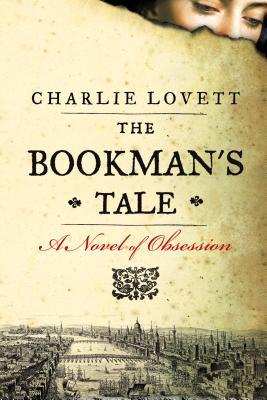
The Bookman's Tale Review


Rating:


     After reading the Earth’s Children series, it was weird to read such a short book. Weird, but still very refreshing. The Bookman’s Tale by Charlie Lovett was my consolation prize for having made it through my last reading adventure. I’d had my eye on this book for a while, and I’m glad I finally got a chance to read it.

     Peter Byerly is the main character in this book. He is an antiquarian bookseller who, while struggling with the loss of his wife, gets entangled in a web of conspiracies that dates back to the time of William Shakespeare. It all starts with Peter discovering a miniature portrait of a woman that dates back to the 1800s. The strange thing is, the woman in the photograph looks just like his wife.

     There were definitely some mysteries throughout this plot that made me want to keep reading and get to the end. I think what I enjoyed most, though, was the love and appreciation for books that many of the characters had. In fact, I’m pretty sure I want to be an antiquarian bookseller myself when I grow up. Actually, I would probably just want to keep all of the books for myself instead of making money off of them so that wouldn’t work. I think I’d rather be a wealthy book collector. J

     I gave The Bookman’s Tale a three because it’s one of those books where, once you’ve read it and you find out what happens, you don’t really feel the need to read it again. I definitely recommend reading it if you never have before, but I probably won’t pick it up a second time.

     One thing I enjoyed, though, is the way Lovett plotted out the story. He set the course of events up over three separate timelines that alternate between chapters. One timeline was set far back in the past, beginning with when Shakespeare was just starting to produce his plays. Another timeline was set in the recent past to show how Peter and his wife met and what happened over the course of their relationship. The third timeline was set in the present to show what was currently happening to Peter and how he was being affected by the events from the other two timelines.

     I don’t think I’ve seen a story plotted out quite that way before, and it always intrigues me to see how authors organize stories that take place over multiple periods of time. I’d love to write something that takes place in the past, and books like this one give me ideas for interesting ways to plot that out.

     If you enjoy reading novels about people who love reading as much as you do, add this one to your list. Another novel that has a bibliophile as the main character is The Thirteenth Tale by Diane Setterfield. I absolutely loved this book, and I can’t wait to read it again someday!
    
     What are some great novels that you’ve read about people who love books? I’m always looking for recommendations in this category!

Sunday, September 27, 2015

The Shelters of Stone Review


Rating:


*For those of you who haven’t read The Plains of Passage yet, SPOILER ALERT!

     I feel silly saying spoiler alert for this post because, was there really any doubt that Ayla and Jondalar would make it back to his homeland? True, there were a few moments that probably had us all a little worried (like the S’Armunai War of the Women), but sure enough, our heroes prevailed!

     In The Shelters of Stone, we join Ayla as she finally gets to meet the Zelandonii. In a way, the whole series has really been leading up to this book, more so than the final one. Ever since Ayla came to realize how different she was from the people of the Clan, she’s been searching for people like her and a place to call home.

     She’s been welcomed almost everywhere she’s gone and even adopted into another family, but there was always this temporary feeling at each place. Her heart belonged to Jondalar, and he could never be satisfied living somewhere other than his true home. Now, at long last, Ayla can really sink in her roots and start a family with him.

     This book was a tough one for me to rate because there wasn’t really anything in particular that I disliked about it. At the same time, nothing extraordinary really stood out to me.

     This far into the series, I’ve gotten used to Auel’s phenomenal attention to prehistoric detail, and I know all of the incredible things that Ayla is capable of. Overall, it was a bit less memorable than the other books. So, it has been given the rating of three Star Lords.

     The one thing I loved about this book, though, was that we finally got to meet all of these people that we’d heard so much about: Jondalar’s mother, Marthona; his older brother, Joharran; Willamar, Folara, and all of his other family members; Marona (ugh); and, of course, Zelandoni, not to be confused with Zelandonii, the name of the people as a whole (yeah, that’s totally not confusing).

     Needless to say, none of these people were expecting Jondalar to come back after five years had gone by, and they definitely weren’t expecting him to show up with a beautiful foreign woman, two horses, and a wolf. Read for yourself to see how each of them reacts and welcomes (or doesn’t welcome) Ayla into their home.

     If you’ve already read this book, I’d love to hear what you thought. Were Jondalar’s family members and his Zolena similar to how you thought they’d be?


Friday, September 25, 2015

The Plains of Passage Review


Rating:


* For those of you who haven’t read The Mammoth Hunters yet, SPOILER ALERT!

     Oh my goodness, this book was exhausting!

     In The Plains of Passage, Jean M. Auel’s fourth installment in the Earth’s Children series, Ayla and Jondalar go on a year-long journey to travel back to Jondalar’s people, known as the Zelandonii.

     Just like with all of the other books in the series, Auel does not fail to place her readers firmly in the story. I applaud her incredible craftsmanship, but, due to that skill, I too felt like I had gone on a journey of epic proportions. Can you even fathom taking an entire year to get somewhere?

     Allow me to digress for just a moment to put this into perspective. When I was about four years old, I went on a family road trip from Florida to the Grand Canyon. I don’t remember how long it took us to get there with all the stops we made along the way, but, according to MapQuest, it takes about a day-and-a-half one way if you drive continuously. 

(I tried to see how long it would take to walk there since Ayla and Jondalar traveled by foot and horseback, but MapQuest couldn’t even calculate it.)

     By the time I got home from this trip, you’d better believe I marched right into the house, grabbed my plastic Minnie Mouse chair, plopped it in front of the television, and sat my butt down. True story. At such a young age, even I understood that more than one day is too long to have to be on the road.

     Yet Ayla and Jondalar dared to set out into the wilderness for 365 days (give or take) through fields of grass that towered over their heads, bug-infested swamplands that made their skin itch, and many other treacherous landscapes.

     Using one of my favorite suspense tricks, Auel also gave them a pressing time limit in which they had to reach their destination. They had to make it across an icy plateau glacier that lay at the end of their journey before the end of winter. Otherwise, the ice would start to melt and it would be too dangerous to cross. 

     Remember, this was long before the invention of GPS, and there was hardly anyone around that you could stop and ask for directions. One wrong turn and they’d never make it home.

     While I was definitely anxious to see if they would get there in time, this book still felt like it took forever to read. I was probably more excited than Ayla and Jondalar by the time this trip was finally over.


      So, book #4 in this series was given 3 Star-Lords. Excellent attention to detail as usual, but a little too long of a trip for my tastes. I think next time I’ll just stay home in my Minnie Mouse chair and leave it to someone else to go traipsing through the plains of passage.


** I couldn't find a picture of me in my Minnie Mouse chair, so I've left you with the next best thing.


Mini me finds the lack of dinosaurs on this prehistoric trip to be highly disappointing.


Friday, May 1, 2015

Part 4: The Rest is History

            For the final part in my Tallahassee Writer’s Conference Goodies, I will be discussing how to effectively research and write historical fiction. This information came from two different sessions presented by Arliss Ryan. I had a chance to read excerpts from some of the books she’s had published, and they were excellent! She definitely knows what she’s talking about, and you should go check out her work on her Facebook page here.

           Without further ado, here is the last golden nugget:

#1. We Search for Research
If you plan on writing historical fiction, it’s important to make sure you get the history part right. Many people that read these types of books are knowledgeable in history, and they’ll know if your facts aren’t straight. Thanks to a handy little tool called the internet, you’ve got a large amount of resources at your disposal to find the information you need.

There are other places that you can find fun facts, though. Consider going to a library, museum, or historical society to learn more about your topic. Keeping in mind that some of your audience will already know a lot about the history you present, you want to give them something new to learn so that your book will feel fresh and interesting. Going to places other than the internet is a great way to dig deeper and uncover unique and largely unknown bits of history.

If your research involves speaking to an expert, make sure that you do your homework before meeting with the individual. Do some basic research and compile a list of questions beforehand. Sending a handwritten thank-you note after the meeting is a nice touch as well.

Who's up for a field trip?


#2. Anna Lies (and so does the Internet)
I remember once getting so excited when I saw an article on the internet that said there was going to be a Doctor Who/Sherlock crossover. I immediately started imagining what the meeting between Sherlock and The Doctor would be like and what that would mean for Sherlock’s opinion on scientific truth. It’s amazing how carried away I got with it. Imagine the crushing blow that I took when I found out later that it was a just a cruel April Fool’s joke put out by the production company. My bubble of excitement had grown so big I’m surprised it didn’t send out seismic shock waves when it burst.

The point of that sad little tale is that it’s ridiculously easy to put something fake on the internet. You have to take everything you read with a grain of salt. Especially if it’s on Wikipedia. Just because Joe Schmo writes an entire article about how dinosaurs actually went extinct from going on a gluten-free diet doesn’t mean it’s actually true. Make sure you’re getting your information from a trusted site, and double-check your info with multiple sources if you can. Also, learn to tell the difference between facts and speculation. If a site says that Harry Houdini was likely a fan of chocolates because his cousin owned a candy store, that’s speculation, not fact. (As far as I know, that last sentence wasn’t even speculation because I made it up.) Analyze. Because Anna lies and so does the internet.

*Bonus tip: Don’t do internet research on April Fool’s day. Trust me on this one.

This is only slightly related, but come on. It's the Hulk. (Side note: Go see the new Avengers movie! It's awesome!)


#3. Information Overload
Info-dumping is a wonderful way to get your reader to put down your book and go do something productive. But as writers, that’s the last thing we want. Think about how to use the factual information you’ve learned to add depth to your story without taking away from your page-turning plot. As Arliss Ryan said in one of her sessions, “Your research should never stick out like a sore thumb, but should be weaved in seamlessly so that the reader hardly notices it’s there.” If you want recognition for how much stuff you know about the Roman empire, go on Jeopardy. The ultimate purpose of your fiction should be to entertain the reader, not bore them with a lecture.

If you want to share important knowledge in a visual way to better represent how it connects to the story, consider including a map or family tree at the beginning of the book. In the Earth’s Children series, Jean M. Auel provides a map at the beginning with an outlined trail of the path that the character takes throughout the story. It helps readers gain a better understanding of just how far she had to travel from start to finish.


#4. That Thing that Writers Do
You know that thing that writers do? Where they put words on paper? Yeah, writing. That’s what this step is about! Once you’ve gathered enough info, checked its accuracy, and decided how you want to present it, you’re just going to write! Keep in mind that you shouldn’t wait until you’ve gotten every little bit of research finished and become a world-class expert on the subject. Since you’re writing a fiction book and not a textbook, you really just need enough facts to make sure your story makes sense and gives characters a vivid backdrop.

This one’s a toughie for me because I always feel like I have to know everything and be perfectly prepared before I begin. But if you did that, you’d just use up all your energy on research and be too exhausted to write. It’s also a good idea to write as much of your first draft as possible before traveling somewhere for research. That way, you have a good idea of the facts you’ll need to learn, and you won’t end up having to make another expensive trip. Just put an asterisk next to info in your story that still needs to be verified and use the ‘find’ tool in word to go back to it later.

Truth.


#5. The Conveyor Belts of History
There are a handful of excellent “literary conveyor belts” that can get your history facts across to the reader during your story without being too obvious. For example, you can use character interaction, conveying info about a place as one of your characters walks through it. This gives you a great opportunity to use sensory language and make your readers feel like they’re really there. Until Apple invents an iPed (which is bound to be the name of their time-traveling moped once they invent it), reading is still the only way we have of traveling to another time in history so make it an unforgettable trip for your readers.

Another way to convey facts is through flashbacks. When you do this, you can share important info with the readers while keeping certain characters in the dark still. Maybe Donna is mentally looking back on her times as a ballerina assassin as she washes the dishes while her friend Becky does the drying and remains completely aloof.

A third information conveyor is dialogue. Just make sure that you don’t have a character telling someone else what they should already know just so you can tell the reader. That makes it seem forced. The character giving the historical facts through dialogue should be a believable source that would be likely to know that info, whether it’s because they’re a studied doctor or an avid eavesdropper picking up the latest gossip.

One other way to share your history facts believably is through character recollections. A great place for characters to have deep inner monologues is a church because it’s a likely place for someone to reflect on things. Make sure your recollections are driven by the character’s unique perspective.

Apple iPed: Coming to a Store Near You


#6. Davy Jones’ Diary
Would you find a story believable if the author included a scene where Christopher Columbus walked up to King Ferdinand and said, “Hey dude. What’s up? Can I borrow your boat? Let me borrow your boat.” Not likely. I don’t know when the word ‘dude’ first started being used, but I can guarantee that Columbus never uttered that word (unless it had some weird alternate meaning back then, like the plume of one’s hat). 

So, since the iPed has yet to be created, how are we supposed to know what historical figures from the past were likely to think or how they probably talked? If you’re able to find a diary or some kind of writing from your chosen time in history, that would definitely be the best way. You can also examine photos of your time period to get a good feel for a place. When looking at the images, try and think about the sensory details. What kind of material are their clothes made out of and how did the weather look that day? Were they eating some kind of food in the picture? What did it probably taste like? This is where you have to get a little creative if you don’t have much information to go off of.

For more help in the language aspect, use the dictionary or internet to look up the kinds of words that were used in that time. Since you’re writing for a modern audience, it’s okay to still use slightly modern language as long as you slip in some words here or there that still give the vibe of the book’s time period.

Welcome, mighty Columbus. The dude on your hat is looking most feathery today.


                And that’s the end of my writing tips from the Tallahassee Writing Conference! As you can see, there is a lot of information that can be learned from attending even just one writing event. I put my own personal twist on each speaker’s advice, but overall, everything I wrote about was learned from a much wiser and more experienced writer. I’ve included links to each of their pages in the posts and on my Miscellaneous page, so I hope you’ll go check them out.


              Other than that, keep writing, reading, and being awesome!

Thursday, April 23, 2015

Welcome!

                Allow me to set the scene for you:

A pair of thick wooden doors open to reveal a dimly lit study. The only source of light comes from the large marble fireplace on the opposite side of the room. You’re drawn in by the warmth of the flames, and, as you get closer, you can hear the crackling sound of the slowly-burning logs.
As your eyes adjust to the flickering light, you start to notice the layout of the room. Other than the large mirror hanging above the fireplace, the rest of the wall space is covered by floor-to-ceiling bookshelves. Upon closer inspection, you realize that you’ve read some of the titles and others you’ve at least heard of. You get caught up in the memories of the stories held in those pages.
The sound of a particularly loud crackle erupts in the flames, and your thoughts drift back to the present moment. You turn around and notice for the first time that there are two plush armchairs sitting in front of the hearth. Their backs are tall enough to hide anyone from sight who chooses to sit down in them. They currently sit empty, but a small round table between the two seats holds a well-worn book, as if someone had been recently sitting there reading.
Without hesitating, you walk over to one of the empty chairs and sit down. As you sink into the soft velvet lining, warmed by the fire’s glow, you can’t help but feel that this place was meant for you.
Your choice to stay seemed to trigger something because the doors you first came through swing open once more. You hear footsteps behind you, and you suddenly start to wonder if you’ve trespassed into someone’s private library. You’re grateful that the distinctive armchair hides you from view, but the stranger doesn’t seem all that surprised to see you when she walks up. Instead, she sits down beside you, and, with a pleasant smile on her face, begins to speak . . .

                I see you’ve found my study. Welcome. I hope you like it. It may not be much in the way of decorating, but it’s cozy.
                You may be wondering why I’m not surprised to see you here. It’s the books, isn’t it? A good story always draws people in time and time again. No matter how you like to read or what your favorite genre is, everyone has something that sparks their imagination.
                That’s why I created this place. I’m sure you’ll have read some of the books on these shelves. There’s nothing better than getting lost in a story, but sometimes a book’s effect on you is too strong to be kept to yourself. This place is the perfect spot to come share your thoughts and hear another’s point of view on your favorite novels.
                Maybe there’s some books that you recognize and have always wondered about. Another great thing about this study is that you’ll hear about a lot of well-known classics and current bestsellers. You don’t have to wander aimlessly anymore to find another captivating book. As a practiced reader, I can give you the ultimate scoop on whether or not a book is worth reading according to your tastes.
                There’s no rule that says we only have to talk about books here, though. Since writing goes hand-in-hand with reading, I’ll be sure to share some of my own works as well as any handy writing tips that I’ve picked up.  One thing to keep in mind is that writing inspiration can be drawn from literally anywhere. Because of that, you may see some random posts about all sorts of things that are currently motivating me or simply making me laugh. I hope they’ll inspire you as well.
                Finally, there’s The Challenge. I’ll give you all the details about that later, but to satisfy your curiosity for now, I’ll give you a few minor details. A few years ago (I don’t remember exactly when), I challenged myself to read all 100 books on BBC’s fan-voted list of the best novels of all time. The list can be found on the right side of this page. I’m almost halfway through, but to push myself to continue, I’m going to add some additional challenges along the way to make things more interesting. I’ll probably make a fool of myself, but that just means it’s more fun for you!
                So now you know what to expect. I hope you’ll stay and visit for a while. The doors to my study are always open for some in-depth book discussions and miscellaneous ramblings.
                There is one note I wish to make. To ensure that everyone is able to experience the joy of reading stories for the first time, please be sure to include SPOILER at the top of your comments that contain any information that could ruin a book for someone. I’ll be sure to do the same.
                Once again, I would personally like to welcome you to Bookin’ It. If you want more frequent updates, feel free to drop by my contact page. Enjoy your visit and come back often!